Mission amongst Muslim peoples is one of five strategic areas of ministry that CMS Australia is emphasising in Vision 2012. This Vision outlines the blueprint for how CMS will do mission over the next five years. As thousands gather for CMS Summer School in Katoomba this week, CMS Federal Secretary John Thew is highlighting the importance of mission in Muslim areas and hoping to see CMS have at least 65 workers in the Muslim world by 2012 " an increase of 50 within the next four years.
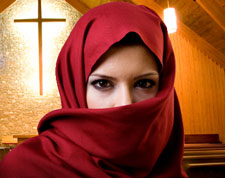 In the CMS Australia Vision 2012 document adopted in August 2008 numerous goals were set by the mission organisation. Five strategic areas of mission were emphasised: Muslims, students, local church ministries, leadership development and holistic development.
This concerted effort to make the Muslim world a major focus is a recognition of the growth in Islam over the last century. Islam was the world's fastest growing religion from the years 1900 to 2000.
"Almost one in five people in the world are Muslim. Islam and Christianity have some things in common, but on the most fundamental questions of all " the identity of Jesus and his saving work for sinners " we are in difficult worlds," he says.
"Muslims need to hear the unfiltered truth about the grace of God, and Christians in Muslim contexts need encouragement to live lives of assurance, even when the dominant faith discriminates against them.
CMS's stated objective in raising up people to reach out to Muslims is "locating people to live and work to display the grace of Christ among Muslims and to take opportunities for evangelising and discipling in Muslim contexts".
"CMS currently has opportunities for cooks, managers, accountants, administrators, engineers, media workers, school teachers, teachers of English as a foreign language and a wide variety of medical professionals. There are also opportunities to pastor international churches," Mr Thew says.
Although CMS has had a presence in Muslim contexts for over a century, Mr Thew says the need for a stronger platform for reaching Muslims was recognised a decade ago and says this new strategic area is an outworking of this position.
"Also included in CMS Australia's Vision 2012 objectives are the goals of increasing overall missionary numbers by 100 to a total of 275, of whom we would like 65 to be working in the Muslim world," he says.
Mr Thew acknowledges this will actually mean significantly more than 100 new missionaries as a number of the current missionaries serving will likely retire or conclude missionary service during the next five years.
The Muslim context
Currently 15 CMS Australia missionaries are working in Muslim contexts.
"The people we send to Muslim contexts are not there to "proselytise', they are actually contributing to society. It is not just important that they are seen by the authorities to be contributing to society " they actually need to be contributing. If there is no integrity in the process we are doing the locals and ourselves as Christians a disservice," Mr Thew says.
"The government wants English teachers, for example, or people caring for oppressed women, and our missionaries are carrying out these services."
Mr Thew says the offer of these professional services gives missionaries opportunities to serve faithfully and live lives of Christian integrity among locals.
"They are a presence. They live in a way that shows the integrity of the Christian faith and the grace of Christ in what they do. They make friendships. People will ask them where they have come from and what they are about. The fact they are foreigners who are Christian will naturally come up in conversation," he says.
"In Muslim work you need to be careful, discreet, offering a professional service and there with a long term view. We need people who are resilient in their Christian faith so they can be patient and survive in a context where they cannot be overt."
Mr Thew acknowledges that not all Christians will be called to serve as missionaries in Muslim contexts. He says another part of CMS's Vision 2012 is that more Christians become committed CMS supporters through prayer and finance.
"For every new missionary that comes on board with CMS we need a whole new supporter base to come with them," he says.
"We currently have 15,000 members and we are looking to have another 5,000 by 2012. All our giving is live giving. We have no resources tucked away. So in the current economic crisis we are hoping people will still be willing to join the supporter base and that current members will continue to support us as well as they have."
Near neighbours require Aussie response
CMS NSW General Secretary the Rev John Bales says having Indonesia as close neighbours is just one of the reasons Australian Christians should be thinking about mission in Muslim contexts.
"Indonesia is world's biggest Muslim nation with over 200 million people and it is right on our doorstep. We need to work hard at strengthening the Christian community there," he says.
Mr Bales says the world political situation means Muslims are more open to questioning their relationship to Islamic authority.
"There is an openness today that has not been there for a long time. There is enormous turmoil in the Muslim world and Muslims are asking what it means to be Muslim and how they express being Muslim," he says.
"The current situation is pushing some Muslims to become more fundamentalist but for others it is raising questions about whether or not Islam is the answer."
Mr Bales says wherever possible CMS partner with local Christian churches within the Muslim contexts to carry out their work.
He says Sydney Christians looking to investigate Muslim mission work can do numerous things to educate themselves.
"Colin Chapman's course is a very helpful tool for understanding Islam. Another is the correspondence course."
"People can also be getting together to pray for ministry among Muslims."
Mr Bales is a realist in talking about the results of increased mission to Muslims.
"I think we would expect to see an increase in violence and persecution of Christians in Muslim contexts. As people get converted it will lead to strife. That is what is happening in places where there are significant numbers of Muslims becoming Christian," he says.
"However, there also a real possibility of bringing greater harmony between peoples in the world. A higher percentage of Christians in the world is always a good thing."
Mr Bales hopes that raising the profile of mission to Muslims will lead to greater numbers of missionaries in years to come.
"We hope that the people who attend Summer School this year and hear about mission to Muslims will be the people who return to Summer School in a few years time to talk about how they are heading out as missionaries," he says.