What do a prison, a hospital, a school, and an ambulance have in common? A shared opportunity and an open door for men and women to proclaim Christ to the lost through the work of chaplaincy.
Chaplains have a unique opportunity to present the gospel and build relationships in places where others may not have access. With sensitivity and grace, they share Jesus in their ministry contexts – whether in the daily rhythm of school life, in response to a major incident or health scare, or by sharing hope with incarcerated people, among other contexts.
As Rev Mal York, Dean of Students and Lecturer in Ministry at Moore College, explains, chaplaincy is an important ministry because it often places gospel workers in situations and alongside people that churches might not otherwise reach.
Shining a light in Intensive Care
Rev Paul Brigden, who currently serves as an Anglican chaplain at Sydney's Royal Prince Alfred Hospital (RPA) is testament to this truth. It was during Paul’s time at Moore College (Paul graduated in 2012) that he first considered chaplaincy, and he has since served in a university college, a school, and a retirement village before his role at RPA. He recalls a recent story:
“I was asked to see a patient in ICU who had been fighting cancer for a long time and wanted to explore Voluntary Assisted Dying (VAD). He asked to speak to a chaplain because he had prayed ‘the sinner’s prayer’ when he was a young man. After speaking to him about the fear driving him, I pointed out that if he had prayed the sinner’s prayer and trusted Jesus, then he would not cease to exist when he died but would have new birth into a living hope (1 Peter 1:3-5).
“Once he realised he would not cease to exist, he relaxed and brightened, and talk of VAD ceased. Before he died several days later, my care shifted to reminding him of this hope in Jesus and to allowing his family and friends to see it.”

An Irresistible Truth
Rev Polly Butterworth (2019 graduate of Moore), a school chaplain at Abbotsleigh and a Schools Ministry Development Officer with Sydney Anglicans, recognised the strategic opportunity of ministry in schools while training to become a teacher and leading on Study Camps. She shares, “I came to realise that school chaplaincy combined my loves of teaching, preaching, discipling, evangelising, and caring pastorally for students, staff and parents.”
Polly has seen God at work among students, staff and parents through classes, Christian lunchtime groups, chapel services, prayer groups, and incidental conversations. She says:
“I am always encouraged by the number of students who come to faith through schools ministry. There are many times when I have been speaking to a student who is mature in faith, only to learn that she is not from a Christian home but has been exposed to the gospel and has come to trust in Jesus simply through her time at school.
“After one Year 7 camp, I was speaking to a student who said she’d like to become a Christian. When I asked why, she said: “Jesus sounded irresistible.” It is such a privilege to hear these responses to the gospel.”
A truth that opens doors
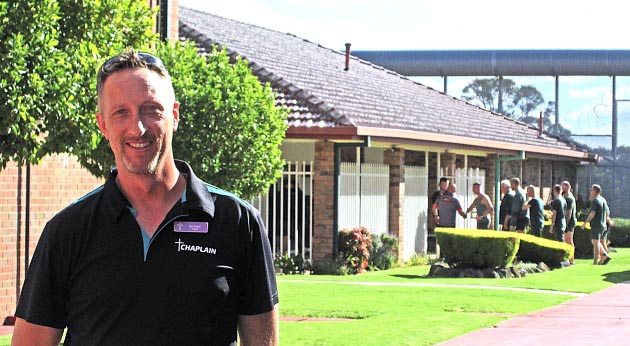
Closed doors cannot keep God’s word out. Rev Dan Evers has been serving as a prison chaplain at Goulburn Correctional Centre for over four years. Goulburn is known as one of the harshest prisons in the country and is home to Australia’s largest super-max facility. Dan explains his day-to-day ministry:
“A significant part of my role involves distributing Bibles to inmates, particularly those in segregation. I regularly see how reading the Scriptures can profoundly impact and transform them as the Holy Spirit works in their hearts.
“In addition to preaching at chapel services and leading Bible studies, I supervise inmates undertaking the Moore College Preliminary Theological Certificate (PTC) course. Those who participate often find that studying God’s word at this level is deeply transformative and encouraging.”
Dan considers prison chaplaincy an incredible platform for gospel ministry, where he can boldly proclaim that no one is beyond the redeeming grace of Jesus.
Thinking theologically about matters of life and death
How do you prepare for conversations with people suffering from trauma, experiencing great life change or learning to live in a fallen world? Mal York believes that a solid foundation in God’s word and being stretched as you think theologically about matters of life and death are so important.
“One of the strengths of Moore College is that it helps you get your theology right. It gives you the tools to continue to equip yourself and to be prepared for the sorts of conversations you might have in chaplaincy. You need theological grounding to help you think through pastoral issues as a first skill in caring for someone well.”
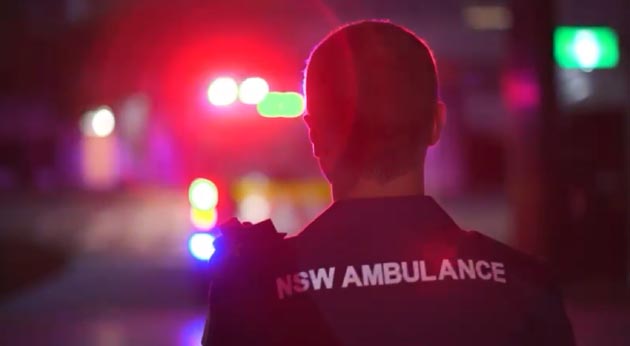
Before joining the faculty at Moore, Mal served as a rector and as a volunteer chaplain for NSW Ambulance (2015–2022). He describes this period:
“I would normally be called to critical scenes involving people who may have children or be vulnerable, where the family needed ongoing support. However, my primary role was to support the paramedics. Often, they would encounter such confronting scenes that they couldn’t return totheir shift. My role was to go in and talk to them, often about spiritual and end-of-life questions. In that space, there were opportunities to talk about faith and what the Bible teaches.”
For Dan Evers studying at Moore gave him deep confidence in God’s word and its power to speak and transform the hearts of the least, the last, and the lost. As he relates to inmates, he believes they need to feel more than simply “pastorally cared for”. In each interaction, he seeks to point them to Christ by opening the Bible and leaving them with a passage of Scripture to reflect on.
For those involved in school chaplaincy, developing the ability not only to teach God’s word but also to apply it to young people in their diverse contexts is essential. Polly has seen how her training at Moore College has equipped her for her work at Abbotsleigh:
“School chaplains regularly navigate the cultural climate; subjects such as philosophy and ethics gave me the framework to consider how to do this well. Through two years of student ministry in a school while at College, I grew in my practical abilities in the unique context of schools. Preaching groups also enhanced my ability to communicate the truths of God’s word clearly. Understanding the place of the Anglican church through studying Church History has assisted me in considering the uniqueness of Anglican schools. Ministry and Mission developed my skills in pastoral care.”
A new chaplaincy opportunity for today’s students
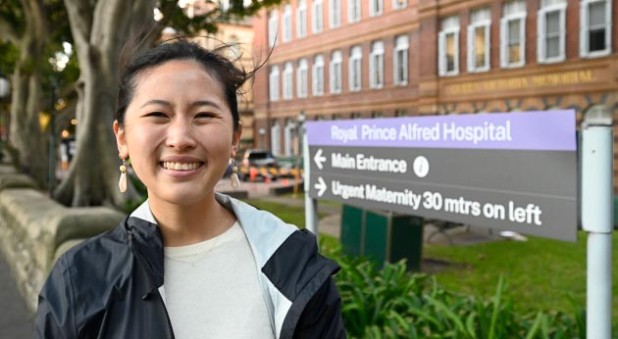
Through his ministry at Royal Prince Alfred Paul Brigden has begun training a team of Moore College students in hospital chaplaincy.
He shares how his time at College shaped him:
“One of the surprising discoveries for me was realising how much of my Moore College training I’ve used in chaplaincy. I expected to use the understanding and skills I developed to teach the Bible. However, I have really needed the training in doctrine, philosophy, and ethics, which has underpinned my decision-making more than I can express. It’s also been encouraging to see the pastoral care program continue to develop in the years since I finished.”
In 2025, a new service team for Moore College was formed: the Hospital Chaplaincy service team. Service teams enable students to support both the College and the wider community. This team works with Paul to meet patients at RPA, offering prayerful support and taking opportunities to present the gospel.

Laura Bee, a second-year student at Moore and a member of the Hospital Chaplaincy service team (above and in main photo), has found this ministry an important reminder of the hope Jesus offers, which never disappoints, even when physical bodies fail. She shares her learnings:
“I've learned about the value of reflective practice in chaplaincy ministry — how to keep growing in sensitively asking questions and providing encouragement. It's been encouraging to see ways that I've grown in these areas over time.”
Whether serving in a hospital, school, prison or emergency service, chaplains step into places of vulnerability with the enduring hope of the gospel. Their ministries require theological depth, pastoral wisdom, sensitivity and courage. Through sustained engagement with God’s word, practical ministry experience and formation in Christian character, Moore College seeks to equip men and women to serve faithfully in these frontline context - prepared to care well, speak truth with grace and point people to the hope found in Jesus.
Find out more about preparing to share God’s word wherever God places you.
Explore moore.edu.au