It was 1856, and the new Reformed Evangelical bishop, Frederic Barker, had arrived in Sydney with his wife Jane the year before. The bishop was responsible for most of NSW – a huge burden. He and his wife immediately saw three great needs and took action to meet them.
The first was the shortage of ministers in the colony. Up until now, the church was relying mainly on English and Irish ministers to come and do the work. But that posed considerable ongoing problems of recruiting and sustaining. Barker's predecessor, Bishop Broughton, had tried to set up a local college but that had failed.
Barker sprang into action. He saw that the considerable estate of Thomas Moore could be used for this purpose. In March 1856, Moore College opened its doors with three students in Liverpool. Now it has around 300 students and is 170 years old.
Secondly, there was a huge need for more churches to be built. Bishop and Mrs Barker travelled, largely by horseback, into much of NSW and saw the problems. Once again, he wasted no time. Among other initiatives, he created the Church Society to raise the money needed and to make sure that it was spent well. Later it became the Home Mission Society and extended its ministry. Today we call it Anglicare and it is one of the biggest operations of its type in Australia, dedicated especially to the care of those in need (another interest of the Barkers). It is 170 years old.
Thirdly, Jane Barker was aware that there needed to be a good education for the daughters of the clergy. To meet that need she encouraged the formation of St Catherine's School. It opened its doors in 1856. A number of clergy daughters attend St Catherine's even today, but it has grown far beyond that, and educates hundreds of young women, not least in the Christian faith. It is 170 years since Jane Barker conceived her plan and acted.
Over the next decades, until his death in 1882, Barker did so much to shape the Church of England in NSW and Australia, in a world that was growing and changing dramatically. He dealt with problems of church and state. He insisted on Scripture in state schools. He set up the constitutional framework of the Diocese and the wider church. And all the time he stood for Christ and the gospel. And he and Mrs Barker loved people.
His first biography was written by the Dean of Sydney, William M. Cowper shortly after his death. The Dean mentioned several wonderful characteristics, such as love and perseverance, but he also said,
'One other feature which marked his character was anxiety for the salvation of souls… He regarded the salvation of souls as the chief object at which the Christian minister should aim'.
Whatever he achieved, this is what was at the forefront of his thinking.
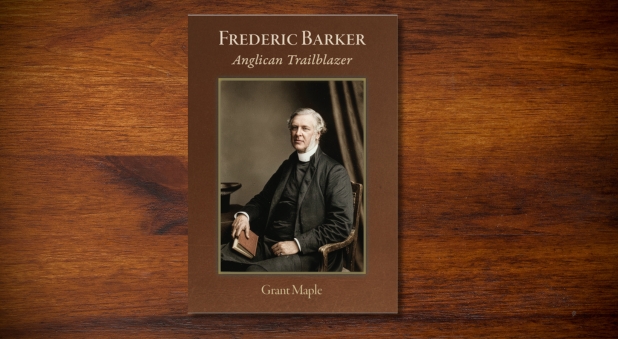
Why am I talking about Bishop Barker? Two reasons. The first is that I have been given the privilege of reading a modern biography to be published in August. It is written by a local historian, Dr Grant Maple, and is entitled Frederic Barker: Anglican Trailblazer. He tells us that, 'the range of Frederic Barker's achievements for the Australian Anglican Church has been unmatched either before or since'.
The book is very carefully researched and written and gives us the whole story of Jane and Frederic, from before they came to Sydney. I found it readable, detailed and quite moving as I recognised all the things this couple went through and the astonishing results of their ministry.
I hope that many people read it carefully and think of the evangelical faith in Jesus that drove these pioneers with results we still experience today.
The second reason flows from the first. It is so easy to forget our history and that impoverishes us. We should be thankful for what was achieved by people who sacrificed a great deal to serve Christ. But in an age in which we are constantly being told that our past was evil, we do well to see the great goods that were done, not least by those who served Jesus and his people with all their heart. Daily we benefit from what they did.
In particular, we need history because the past has shaped us. As well, we have been handed a legacy that we must retain. The strength of great works such as Moore and Anglicare and St Catherine's can only be retained if we carefully, knowingly and thankfully guard them.
When we forget our history it makes guarding our legacy all the more difficult.
Our thanks to Dr Maple for what he has done in reminding us of the Barkers.
Bishop Peter Jensen was Archbishop of Sydney from 2001-2012. A report on the 170th anniversary of Anglicare Sydney can be found on page X.