In early March 2026, headlines lit up around the world about the re-ordering of what's known as the Anglican Communion - the grouping of Anglican churches around the world which emerged from the English missionary efforts of the 18th and 19th centuries and later.
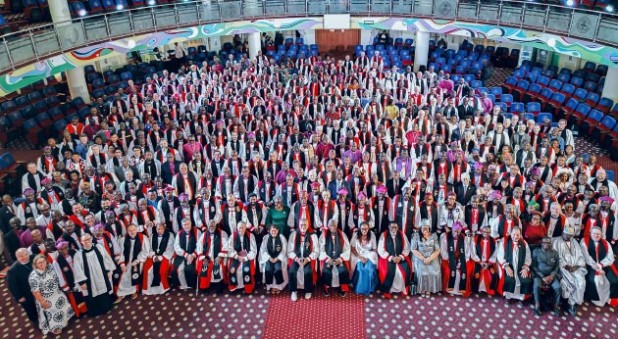
The Global Anglican Future Conference, which has drawn together the majority of the largest churches in the communion, held a meeting in Abuja, Nigeria.
Here are the answers to some key questions:
What happened in Abuja?
To explain this, we must go back to 2023, when leaders of the Gafcon movement formally rejected the role of the Archbishop of Canterbury.
The Archbishop of Canterbury, who is the leader of the Church of England, had been traditionally seen to have a leadership role in the church globally, since it was the English church that had originally established Anglican provinces throughout the world. However, revisionist theology which denies scripture has taken hold in much of the English church and its leadership.
The Archbishop of Canterbury had not taken a stand against the departure from the historic Christian faith and had championed the introduction of same-sex blessings into the life of the Church of England, forcing the Gafcon leaders and those of the other main grouping, the Global South Fellowship of Anglican Churches, to rebuke and reject his leadership.
Since then the 'primates' - Archbishops who lead provinces - and other bishops and significant leaders have responded by pressing on with plans to re-order the Anglican Communion not around Canterbury, but around the Christian faith as given to us in the scriptures and affirmed in the Anglican church’s foundational documents – the 39 Articles of Religion, the Book of Common Prayer and the Ordinal .
They met in Abuja to continue working together towards that goal.
What are the issues?
The Anglican Church globally has been divided for some time on core doctrines—the authority of Scripture, the person and work of Jesus, sexuality.
The Gafcon and Global South movements have responded by offering a path to unity grounded not in colonial-era structures but in shared biblical faith.
Christianity is thriving in the global south, even as much of the Western church faces decline and theological revisionism.
What does this mean for my local parish?
Your local parish will probably not be impacted by this global re-ordering, unless you live in an area where leadership has departed from historic Christian faith.
This revisionism has unsettled many Anglicans who are now unsure of the things they have been taught which seem at such variance with the Bible. Alternative oversight has been provided in many parts of the world where this has happened.
Australia has also been touched by such issues and Gafcon Australia has been working to uphold biblical witness in parts of the country where it has been impaired.
Gafcon is not a movement which seeks to leave the Anglican Church - it is a movement for renewal from within.
I'm concerned about talk of schism and division - why can't we all just get along?
Christians must seek peace, yet Scripture also calls us to guard the faith once delivered to the saints.
Blessing what God does not bless leads to confusion and weakens mission.
As one Abuja speaker said: “Institutions exist to serve the word of God. They do not stand above it.”
Unity is found not in ignoring error but in returning together to the gospel.
What happens to the Archbishop of Canterbury?
The Archbishop of Canterbury will continue to lead the Church of England, but her role as a global focus of unity has effectively ended for the majority of Anglicans.
Provinces aligned with Gafcon and the Global South now recognise leadership based on shared doctrine rather than historic English structures.
The Church of England remains part of Anglican history, but its revisionist trajectory means it no longer speaks for global Anglicanism.
What does this mean for Sydney Anglicans and the Archbishop of Canterbury?
This is a ‘reordering’ of the Anglican Communion not a ‘breakaway communion’ but represents the reassertion of the Bible and the Reformation formularies as the basis of fellowship among Anglicans worldwide.
The Abuja Affirmation rejects the so-called ‘Instruments of Communion’ – the office of the Archbishop of Canterbury, the Lambeth Conference, the Anglican Consultative Council and the Primates Meeting – as having failed over more than two decades to maintain biblical doctrine and discipline.
The diocese of Sydney has disengaged from these ‘Canterbury Instruments’ since the 1990s.
What does this mean for Sydney Anglicans and the Anglican Church of Australia?
As Archbishop Raffel said “Our diocese remains committed to the spread of the gospel through the Anglican Church of Australia. And we give thanks to God for our partnership with gospel-minded and faithful leaders especially of majority-world Anglican Provinces across the globe, who joyfully submit to the Word of God and courageously proclaim Christ faithfully to the nations.”
The diocese of Sydney remains part of the Anglican Church of Australia whose Constitution affirms that the ACA is a church ‘in communion’ with the Church of England, ‘so long as communion is consistent with the Fundamental Declarations’ (of the Constitution).
Read the full Abuja Affirmation and Archbishop Raffel’s response