Revered but unread: the Greek Bible dilemma
"This is the book I wish I'd had in the '70s."
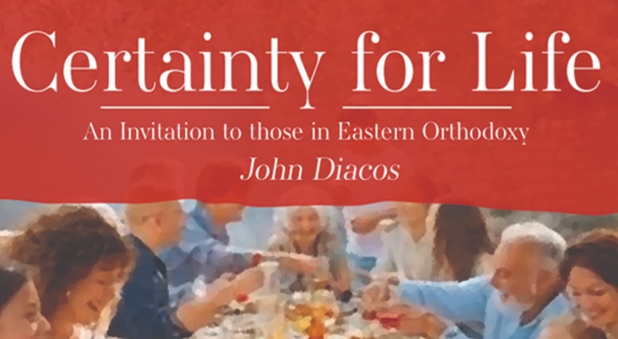
Phillip Jensen loves Greeks. Maybe it was growing up around migrants in 1950s Bellevue Hill or the students he met while he was chaplain at the University of NSW. But the affection was evident as he launched the book by Dr John Diacos titled Certainty for life: An Invitation to those in Eastern Orthodoxy.
"The Greek culture has brought to us family… big family, wide family… integrated across generations," Mr Jensen told the audience at the launch. "It's told us a warm culture that you've brought… fun, spontaneity and, of course, food.
"It's also brought with it orthodoxy. I love orthodoxy, for it was the Orthodox who endured the subjugation of the Ottoman Empire and stood firm for Jesus. And in the 1940s it was the Greeks who stood up against Communism and the atheism that went with it."
Apart from those historical notes, Mr Jensen found a real accord with the students he met, starting in the 1970s, "for they all believed in Christ's divinity. They all believed in Christ's resurrection. Resurrection is so important within that Greek Orthodox culture… they all believed in the inspiration and the authority of the Bible."
However, Mr Jensen noted that this common ground had its limits.
"That's where I also started to find the discord, for believing in Jesus' resurrection didn't seem to lead them to an understanding of the gospel, of why Jesus died or why he rose or what it actually meant or its implication for their lives other than being Greek, being Orthodox, and attending festivals.
"And while the Bible was revered and honoured by every one of them I met, it remained unread. In fact, hardly any of them owned a copy."
Enter John Diacos and the book Phillip Jensen wished he'd had in the 1970s. Dr Diacos, Mr Jensen says, is far more qualified than him to write the book. "He's talking as a Greek Aussie who grows up with the uncertainty that comes from his religion and the confusion that it brings."
The issue of certainty is central, hence the title, but Greek heritage also explains some of Mr Jensen's frustrations with his student friends.
"I couldn't understand why they wouldn't renounce orthodoxy to become Christian. For them that was an impossibility. For orthodoxy is Christian. How can I renounce that?
"Furthermore, orthodoxy is so Greek and Greek is so orthodoxy, that to renounce orthodoxy would mean to renounce being Greek, which is from their viewpoint what I am, and so I can't give that up."
Not that Greeks are the only audience for the book.
"I read it thinking 'Greek'," Mr Jensen says, "[but] I presume it would work just as much for the Armenian friends that I have as for Greeks, because it's orthodoxy, not just Greek."
One of the strengths of the book is the gentle way Dr Diacos quotes the Greek giants of theology such as Athanasius.
"These [quotes] show that the men who actually had read the Bible knew of this salvation and are saying the same things, and they're Greek," Mr Jensen says. "So it's all right to believe these things. It doesn't become an anti-Orthodox book or an anti-Greek book, but one which calls back to our foundations and especially back to the foundation in the Bible, to which we all ascribe, even if we haven't read [it]."
Dr Diacos also embeds testimonies from Greek men and women who have turned to Christ and urges people to use the book in talking with Greek friends, to give book reviews in prominent places online and engage with his podcasts and courses at certaintyforlife.com.
"Pray for your friends and for all Orthodox people everywhere," he says, "trusting that God is powerful to save. That what is humanly impossible – to overcome family and cultural loyalties and other stumbling blocks – that God can overcome all of that through his gospel and transform us to become the people we are created to be, serving God and living an abundant life. That's what I want for Orthodox people everywhere."