Lie to me is a program that injects new life into the aging detective drama, daring its villains to try and get away with one of humanity's most practised sins.
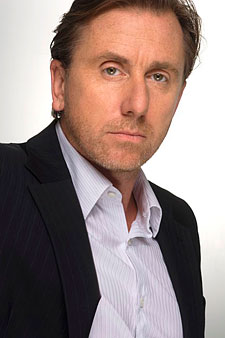 Originally a Foxtel program, Lie to me has found it's free to air home on Network TEN. The series' key character, Dr Cal Lightman (Tim Roth), is an expert in reading the universal, micro-muscle movements that indicate what emotions a person is feeling when they speak. Ergo, he can tell a person is lying just by looking at them. Surely his last name is something of a parody because he is called in when conventional investigations fail as the 'man who brings light' to dark cases.
Like many super-detectives before, Lightman is the quintessential scientist, so completely aware of his specialty - he spent years studying the eyebrows of tribes in Africa - that he is somewhat lacking in basic people skills. Add to this the cynicism and certainty that a career in detecting lies has produced and you end up with an interesting cross between CSI's Gil Grissom and House's Dr. Gregory House. Lightman wanders through life observing truth withheld at every turn, on every face, in every expression. Throw in a dash of bitter divorcee and it's no wonder he confesses early on, "I don't put too much trust in words, myself."
The basic premise behind Lie to me is pretty clear: everyone lies, all the time. Lightman quips to a colleague about to visit a politician, "Charge him by the lie and retire tomorrow!" The senator in question reacts angrily that the doctor obviously assumes all civil servants are liars. But his partner corrects him, "He assumes that you are a liar if you are a homosapien." Lightman informs his students that the average person tells three lies in a ten minute conversation, and one victory is summarised as 'one liar down, six-and-a-half billion to go'. It's not a very high view of humanity, and maybe a healthy one. But neither, it turns out, does it rest on a very low view of deceit.
The motivation for lying is the series' key plot device, and the real decider as to whether or not any guilt should be attached. Dr Lightman's offsider, a clinical psychologist called Dr Gillian Foster (Kelli Williams), assures a mother caught out lying to protect her son,
"Everything you are doing makes perfect sense. When we experience fear we try and do everything we can to exercise control."
Putting aside the easy justification, it's an interesting observation. Is this how lies are perceived today? A matter of functionality rather than morality? In which case truth is not so much a virtue any more as an admirable option. Under this justification we lie to children, lie to the sick, lie to the annoying neighbour to ensure a smooth, controlled passage through life. And truth can be dispensed with - quite correctly - when it will not deliver the desired goal, particularly when it might actually jeopardize our ability to hold life in balance. Dr. Lightman points out that truth is not always welcome. "Truth or happiness, you can't have both," he assures Dr. Forster. We may not lie, but then neither do we seek the truth. We don't always want to know; it is better to be in the dark on some things, or so we tell ourselves. According to Dr. Lightman, self-deception is just as much a part of maintaining our balance as lying to others:
"You believe whatever you want - that's what everybody does."
However lies are never as neutral as Lie to me would suggest. Obviously they hurt those we lie to because however well intentioned we may be, we lead them to build their lives on sand. And however much we hope to gain from their telling, the constant practice of lying builds up a thick callous across our consciences until we are no longer even sure what the value of truth is.
But what if we were not even gaining any benefit from lying?
One of the best aspects of this new series is the amazing 'tricks of the trade' that criminologists use to detect whether or not a person is lying. It shows just how easy it could be to spot a lie, even though its telling may give us the illusion of security (I for one will be watching more carefully how someone speaks to me in future). But what if there was a 'Dr Lightman' present for every conversation we had? What if there was someone who was able to see beneath our skin and our attempts at camouflage, and read the very motives of our hearts?
This is how the Bible presents God. He does not mishandle the truth, nor do His children; lies are the native tongue of a different family altogether. God is the one who will take every careless word into account on the last day, and the final measure of truth when it comes to deciding what was justified. And He won't lack any of the information that Dr Lightman and his team have to painstakingly discover. In His presence there will only be room for truth. Should we practice living there today?
—-
Lie to me
Network TEN
Tuesdays, 9.30 pm