Questions of identity are hot property within our society presently. How do we define ourselves? How do we define our relationships with one another? By race, gender, sexuality, work" What really is the point of it all? What does it mean simply to be human? It is in this context that Michael Jensen's book, You: an introduction, has been written, appropriately addressing the issues.
The introductory chapter begins by tackling questions like these, provides a brief survey of some "points of anxiety' for people as they contemplate "self' today, and then clearly places the main objective of the book on the table: what does the Bible have to say about how we find our identity, and how does this compare with alternative views.
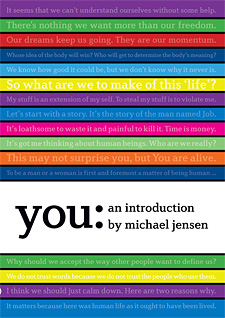 The rest of the book consists of fourteen short chapters reflecting on parts of being human including "life', "body' and "speech'. Whilst there is some sense of flow and connection between the chapters (particularly the last three), each stands quite independent of the others meaning the book basically doesn't need to be read in any specific order. Additionally, the end of each chapter includes some comments taken from Michael's blog (which is where the book's content was originally written).
This flexibility in the structure of the book, along with its readability, contributes to what I think is one of its chief strengths: You: an introduction makes a fantastic conversation starter. The content of each chapter, including the "comments' section, may sometimes seem a little inconclusive, but there is ample material provided to begin meaningful discussions within a whole range of different relationships.
Likewise, the endnotes point to the incredible blend of material that makes up this book. And, unlike some attempts that are made to engage with the surrounding culture in sermons or in other literature, Michael's references contribute positively to the points that he is making without seeming forced or out of place.
The heart of the book however, is not merely to start conversations about culture, but rather an attempt to encourage people to think through how the Bible, and therefore Jesus, impacts how we think about our identity as human beings. To this end, each chapter brings a digestible portion of scripture to bear on the idea being discussed, with a clear explanation of its implications.
Whilst some of the content may seem somewhat (deliberately) inconclusive, what is made very clear over the course of the book is that true human identity is found in and through the worship and honour of the Lord Jesus, who has defeated sin and death by his own death and resurrection, reconciling us back to God.