 My parish church is St Stephen's, Newtown. We meet together in the wonderful old church designed by Colonial Architect Edmund Blackett, situated in the equally historic Camperdown Cemetery. Some people might consider our church site rather depressing, but not our congregations, for the cemetery is usually central to our activities. Morning tea there every Sunday, parish picnics and barbecues, Christmas Family Service with a children's zoo and pony rides, the evening service called "Church in the graveyard', all these happen in the cemetery.
Last month we reverted to a more sombre note for we hosted the 150th Anniversary Memorial Service of the wreck of the passenger clipper ship, Dunbar. There were wild storms on the night of August 20, 1857 when the ship was entering Sydney Harbour. After 81 days at sea it was within hours of its final destination, but the ship was pushed by the winds and stormy sea onto the rocks and cliffs between The Gap and Macquarie Lighthouse. The journey proved indeed to be a final destination, a coming home, for of the 122 people on the Dunbar, passengers and crew, only one man survived.
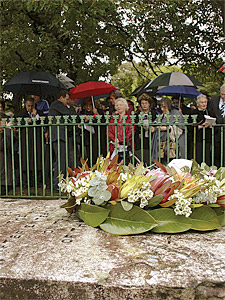
Our Newtown service was on Sunday August 19, a day of intermittent heavy rain. Just what you don't want for a church event that includes outdoor activities. But how appropriate the rain was, for were we not remembering the sad deaths of many at sea in wild and stormy weather so long ago? The rain was not daunting enough to stop a large crowd gathering at St Stephen's for the memorial service. We enjoyed the fact that our church was full.
The Dunbar's passengers were not convicts, nor were they refugees or people seeking a better way of life in the new world. They were mainly well-known Sydneysiders, leading residents, members of families from the upper echelons of the colony who were returning to Sydney after time spent "at Home'. The population of Sydney was about 60,000 at the time, and the town was struck with horror when the evidences of the shipwreck were washed up the next day " pieces of the wrecked ship, furniture, cargo, carpets, hats, children's toys, clothing, linen drapery, and many bodies, men, women and children. Mailbags bearing the name Dunbar appeared so it was soon realised which ship had gone down. Sydney residents rushed to view the scene.
The bodily remains that were washed ashore were buried in the Camperdown Cemetery, where St Stephen's now stands. 20,000 persons, one-third of the total population, lined the route of the funeral procession that moved along George Street out to the cemetery. Businesses, shops, banks and Parliament itself closed doors for the day to allow people to pay their respects. People were stunned. Steve Meacham wrote recently in The Sydney Morning Herald that the wreck of the Dunbar "shook the youthful confidence of Australia"; others call the event "Australia's Titanic'.
The one survivor, seaman James Johnson, who clung to the rocks for 36 hours before he was rescued, lived the rest of his life in Marrickville. So the Mayor of Marrickville Morris Hanna came to the service and read a lesson, as did Governor of NSW, Professor Marie Bashir. Both read from the Dunbar Bible, which was washed ashore, saved by a family named Wheatley and eventually given to St Stephen's.
St Stephen's enjoys time together in the cemetery, yet it is always an important reminder to us of the fragility of life. However invincible we feel, with our plans for our future, the Dunbar Memorial especially reminds us it is to Jesus that we must look for our eternal future, for as the disciples said, "Who then is this, that even wind and sea obey him?" (Mk 4:41).