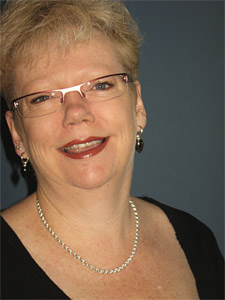
 As a working mum, the pastoral care minister at St Luke's, Miranda, Jennie Everist is grateful Mary Andrews College (MAC) has enabled her to continue theological training despite her busy schedule.
"They are not trying to make a woman's life fit in with them," says Jennie, who is studying part-time over eight years. "Their structures fit in around our family lives."
While women are the mainstay of most church activities, the structure of most theological training courses does not mesh with their lives, says Archdeacon Narelle Jarrett, principal of MAC.
"Women often cannot study full-time or at night," she says. "Because women are "time poor', we try to provide training in the daytime within school hours and in various locations."
Courses are held at Dapto, Canberra, Campbelltown, Emu Plains, Stanmore, Chatswood, Caringbah and on request by a parish. Jennie says being able to attend lectures locally, and within school hours, has been a key issue for her.
"I am a working mum: a full-time mum and wife. Yet I am still able to fit in the study because I don't have to travel into the city but am able to go to a nearby satellite course at St Philip's, Caringbah."
Jennie's boss, the Rev Stephen Gibson, says he is glad the Diocese's training institutions are paying more attention to the training needs for lay ministry.
"MAC is pioneering a very helpful model," he says. "We need such accessible entry points into theological training."
He is also a big fan of Youthworks' Year 13 course for school leavers.
Moore College holds its evening diploma-level lectures at St Luke's each week. And the Miranda parish has one of the biggest enrolments outside Moore College's Newtown campus.
"It is a terrific resource for our people to do training on site," says Mr Gibson.
Indeed, parish-based training is set to enter a new era thanks to the recent appointment of the Rev Gary Nelson, the first full-time external studies director at Moore College for two decades.
Gary has a raft of initiatives in the pipeline. These include the possibility of DVD or web-based training for under-resourced churches that cannot provide their own leader. The external studies curriculum is also being overhauled - the Certificate rewritten and the Diploma reviewed - to better meet the needs of frontline lay leadership. Amongst the new units planned is one on preaching.
"Resourcing the training needs of parishes is one of our top priorities," says Mr Nelson.
For Jennie, the MAC training has helped her become more intentional in her conversations, especially in her often difficult work ministering to the dying and their families.
"I see my role as bringing God's word to bear on people's lives, so I am becoming better equipped," she says. "The first time I ran a funeral was when I was doing an evangelism topic at MAC. I was seeing a woman for two weeks before she died. It helped me to be more precise in the way I was leading the conversation. The Holy Spirit was busily reminding me of what I was learning at MAC."
Archdeacon Jarrett says this "hands-on' training is a key focus of MAC's courses.
"Recognising that women have wonderful networks and connections into the community, we major on helping them to speak normally to others about Jesus," she says.
Not only is Jennie responsible for the parish's ministry in three local retirement villages, she also takes funerals.
"It is a privilege to sit with people as they are dying and to see them, in some cases, rediscover Jesus or find him for the first time. It is wonderful to be able say that Granny was OK with her death as she knew she was going to see Jesus. It is very reassuring for families to know that their loved one was ready to go," she says. "To be able to share the gospel with those left behind is a great honour."