For many people depression is that term they use for feeling a little worse than being in a low mood. It's a feeling we have all had " being sad, moody or low " it's a normal part of life and it passes.
But what happens when the low becomes more normal than not, if it does not go away. What happens when life becomes a long, dark, lonely experience, when the feelings become a serious illness that is so debilitating that normal living is impossible. This is the "black dog" of clinical depression.
 It is a surprisingly common experience that has often been called the silent epidemic. Yet despite its recent publicity, many people still do not understand what clinical depression is and how to manage it. There is still a stigma attached to it that leaves those who suffer from it and those who care for them isolated and misunderstood. It raises questions about the goodness of God and his willingness to answer prayers, intervene and heal.
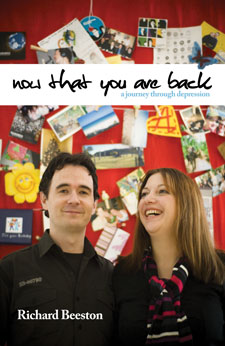
Now That You Are Back is the story of Richard and Alison's struggle with depression. It is the firsthand account of the way it became a real and dominating aspect of their lives. They chronicle their struggles to understand and come to terms with it and the treatments they undertook to overcome it.
They describe the reactions of family, friends and work colleagues. It is an honest and revealing glimpse of the way it affected them physically, mentally, socially and spiritually and what they have learnt of God's providence and love through the experience.
While Richard goes some way to explain what depression is (he writes about the results of his own research in several places), the book is predominantly about their experiences and the lessons that it taught them. It is written from Richard's perspective as Alison's carer (though there is a revealing chapter where Alison reflects on her experience) and has an easy narrative style. As one who has had firsthand experience of depression, I found it gave me new insight into the illness and the devastating effects it can have and the way God uses such experiences to bring about his good.
All of us will, at some stage or other, come into contact with the "black dog", whether as a sufferer, a carer or a friend. Now That You Are Back will help you understand what it is like and what you can do help.