We’ve all seen them – the massive bulk carriers or container ships that seem too huge to float and yet move vast quantities of goods and materials across our oceans each day.
From a distance the ships often look deserted apart from their cargo, but on board the seafarers are busy doing everything from cooking to navigation and engineering maintenance.
It’s a lonely life, separated from family for many months at a time, and this is where organisations like the Seamen’s Christian Friend Society (SCFS) and the Mission to Seafarers can be a source of physical, mental and spiritual support.
Rob Flinders, an 85-year-old former seafarer, has been a port missionary with the SCFS for 25 years, based most of that time at Port Botany. The position is voluntary, but he works five days a week – sometimes seven, depending on when the ships come in, if there’s an emergency and what stage the seafarers have reached in their Bible studies.
“When I visit each ship, I have two aims,” he says. “One is to engage with non-Christian seafarers and to offer them Bibles and Bible courses to study. The other aim is to find any Christian seafarers that might be on board the ships. Generally, they are few and far between but if I find a Christian seafarer my aim is to encourage him, provide him with fellowship, provide him with motivation to reach out to his non-Christian crewmates and to help him do that. I provide him with the resources he would need.”
If he visits a ship and some of the seafarers decide to take up his Bible course offer, that ship becomes a regular commitment for him. Each time it returns to port, Mr Flinders will visit, see how the crew members are getting on and how they’re doing with the Bible course.
“The courses that we use are very evangelical,” he says. “At the end of every lesson there are 12 multiple-choice questions, and their answers give me an insight into what they understand and don’t understand.
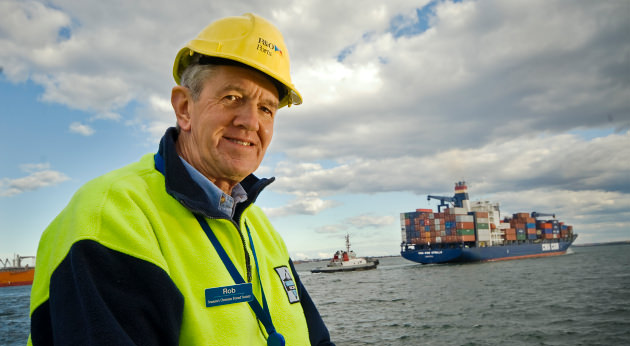
“It occasionally happens that I’ve got two, sometimes three ships in port that I have to visit. And the ships arrive and depart 24 hours a day – there’s no deference to the weekend or Sunday! I occasionally go after church on Sunday morning or on Saturday afternoon before dinner. Whatever is needed.”
There are about 20 Christian seafarers Mr Flinders is in regular contact with, most of whom are faithful in leading weekly Bible studies on board with their crewmates. This is an important step, as he is only able to visit personally when a ship is in port – which, for ships trading to Southeast Asia, is once every six to seven weeks in a contract that usually lasts for nine months.
“Seafarers rarely have an opportunity to go to church,” he says. “They spend 85 per cent of those nine months out on the high seas, not in port. And in many, many ports they may never see a chaplain or another Christian at all.
“I love that SCFS is evangelical... getting the Scriptures physically into the hands of the seafarers and encouraging them to read and study the Bible.”
Finding ways to connect
Mission to Seafarers (MtS) and the Seamen’s Christian Friend Society were set up in the mid-19th century in the UK, by men keen to show Christian love and support to those who worked on the seas.
In ports across the world, both organisations offer practical care to seafarers as well as holding out the hope of the gospel. And if you’re thinking that’s quite a niche group, consider this: depending on the time of year, one week can see dozens of ships, carriers and tankers arrive at different Sydney terminals.
Last year, the Mission to Seafarers centre in Millers Point alone welcomed more than 7000 seafarers through its doors, and made over 600 support visits to ships, hospitals and hotels. And both organisations would be able to do more if they had more staff or volunteers.
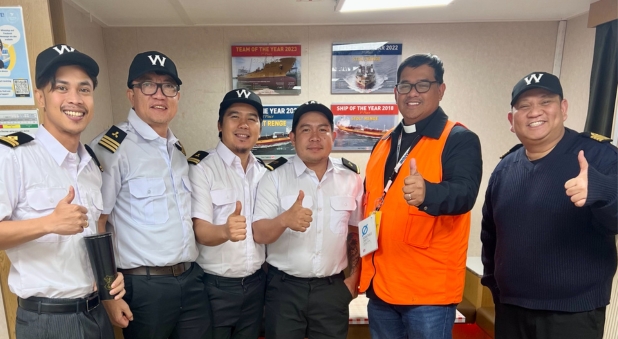
The Rev Retchie Salvador, one of the Mission to Seafarers chaplains, says people are always surprised when he tells them that at least 90 per cent of the things we need and use in Sydney are brought here by ship.
“The seafarers are less recognised for their work because they stay on the ships for so many months,” he says, “but it’s not the ships that bring the goods here. It’s the people.”
It’s a hard life for those on board, so when he visits the first thing he asks crew members is how they are doing – checking on their day-to-day lives, whether they are being treated well by their superiors if they are lower-ranked crew, and whether their surroundings are safe. However, the long stretches at sea and time away from loved ones who need them, can result in serious anxiety or depression – even suicide.
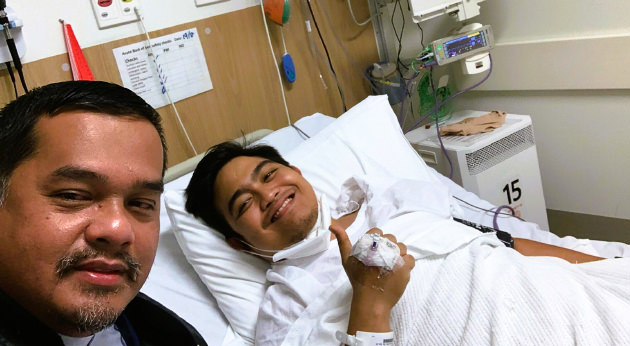
“I try to build a rapport with them and through conversation they open up about their problems and we pray for them,” he says. “It shows them we’re concerned and there to care for them.
“It’s a privilege to help them with whatever problems they go through. At any time of the day, we chaplains are on call – even on our days off... If a message comes in at night and it’s really important, I have to attend to it. There might be a serious problem, or they might be in a different time zone and contact us only when they have free time.”
The fact that Mr Salvador is Filipino and speaks three of his country’s languages is hugely valuable, as about 40 per cent of the seafarers he meets are from the Philippines. Having said that, each vessel has numerous nationalities on board – from Eastern Europe to Myanmar, and China to Indonesia – so his goal is to connect in any way he can to show them the love of Christ, which can include anything from facilitating visits to the mission to arranging for mail deliveries or getting hold of their favourite snacks.
“Many are not from a Christian background so that can be a challenge for us, but they often respond very positively,” he says. “They may not want to accept a Bible, but they are willing to listen and talk about religion and faith.
“For me, every day is a reason for me to praise the Lord because there are times that you get home at night tired... then you receive messages from people saying, thank you for coming on board, thank you for the Bible, thank you for the prayers.
“If people are blessed with the ministry that we do for them, that’s more than enough for me to thank and praise God.”
Prayer and praise
- Pray for more labourers to be sent into God’s harvest field among seafarers on ships visiting Australian ports.
- Pray for wisdom, good health and endurance for those who spend long hours visiting ships and supporting seafarers; pray also for that they will keep walking by faith, not by sight.
- Give thanks for the 20 or so Christian seafarers linked to SCFS who faithfully reach out to their crewmates each week.
- Thank God for the blessing that Mission to Seafarers and SCFS are to countless seafarers around the globe.
- Pray for the Lord’s hand to be on the new Filipino congregation Mr Salvador has begun in Granville.