Patrice Niveaux is president of the Perspectives church planting network in France.
This is an edited version of talks he gave last month at the Church Missionary Society’s annual Summer School in Katoomba.
On the surface, France looks like a deeply Christian country. Cathedrals, a church in every village, Christian holidays, biblical references in culture, and a history shaped by nearly 15 centuries of Christianity – all of these present the image of a “Christianised” nation shaped by faith.
But when one looks closely at the country’s present spiritual reality, a very different landscape appears. This is a nation where religious practice has drastically decreased, where faith is often considered a private matter, where new generations have grown up with no biblical references, and where secularism laws increasingly restrict public Christian witness.
Yes, France has a Christian cultural heritage, but this does not mean its people know the gospel or walk with Christ. The evangelical world is holding firm in the face of the decline experienced by Catholic and Lutheran-Reformed churches, but this does not prevent the continued deterioration of the church’s public image.
The nation is postmodern and post-Catholic, so while there is a renewed search for meaning this has little impact on church attendance. In 1961, 35 per cent of French people said they attended mass “every Sunday or more”. By last year, that figure had plummeted to 5 per cent. In 2007, 59 per cent of French people reported that they had at least one active, church-involved Christian among their family and friends. Today, that is 47 per cent.
Because of its Christian appearance, some assume that people in France already know the gospel, even though many have never heard it clearly. Others imagine France as a resistant or indifferent field; yet beneath the surface of secularisation lies a real thirst for meaning, a search for truth, and an unexpected openness.
So, within this complex yet opportunity-filled context, where does the gospel stand in France, and what paths is the Lord opening up ?
A society marked by secularisation
Like much of the Western world, France is strongly individualistic, so autonomy, freedom and personal expression are prioritised. People expect to think, act, consume and believe according to their own preferences, so religion does not disappear but it becomes personalised: everyone believes whatever they choose. It’s religion à la carte.
French thinkers such as Camus and Sartre reinforced existentialism as an extension of individualism. Sartre said, “If God does not exist, everything is permitted. Man is the future of man”. The famous phrase, “I think, therefore I am” has given way to “I experience, therefore I am”.
The massive social, political and cultural protest movement of May 1968, which involved millions all around the country, was a challenge to authority, social norms, consumer society and traditional morality, as well as the Catholic Church. So, an entire generation sought to forge a new path and, from that moment, the Catholic Church began its steep decline.
Yet, paradoxically, the same cultural rupture that weakened traditional Christianity opened the door to a renewed spiritual search among younger generations. Young people today have returned to questions such as, “Who am I?’, “What is the meaning of my life?” and “How can I find inner peace?”
The decline of Christianity created a symbolic void. Now, youth no longer want an inherited religion, but an experienced, coherent and lived faith.
In addition, the ongoing health, social and economic crises of the 21st century have prompted new existential questions. We believe the gospel remains a highly relevant answer for today’s youth in France, but it requires a relational rather than an institutional approach.
France’s evangelical church
Evangelical Protestantism is likely the fastest-growing form of Christianity in France. From 50,000 practitioners in 1950, evangelical churches now have more than 750,000 members – which is encouraging but remains insufficient for a nation of 67 million people!
In France today, there is one church for every 29,000 inhabitants, a ratio that makes it difficult for every French person to hear the gospel. For years, evangelical churches have pursued the goal of one church for every 10,000 inhabitants, sparking a vision for planting churches in both urban and rural areas.
Yet, new faith communities emerging within a neighbourhood may face suspicion. Added to this is a somewhat skewed understanding of secularism – which is meant to guarantee freedom of belief and practice but is often interpreted as a prohibition against speaking about one’s faith in public. This confusion can hinder the communication of the gospel.
For this reason, Perspectives seeks to plant churches that embrace a missional lifestyle. The idea is simple: each believer aims to be authentically present where God has placed them – at work, in cultural or sports activities, and within circles of friendship. By intentionally getting to know local residents – their stories, needs, sensitivities and struggles – we can build relationships of trust. Through these relationships, we have the opportunity to demonstrate the beauty of Christ living in us.
Spiritually, a missional lifestyle within planting communities is expressed through prayer, service, solidarity and disciple-making. Each member is encouraged to view everyday life as a natural place for witness. Mission is not reserved for the planters but is the identity of the entire community. Everyone is invited to participate with their gifts.
Unfortunately, access to meeting spaces is a major challenge. High property costs, a shortage of suitable venues, reluctance from landlords to rent to religious groups, and numerous administrative regulations can make it difficult to find a place to gather.
Because of this, Perspectives is exploring new models of church planting, in which the church grows through the multiplication of small house groups.
This model is especially relevant in today’s France. Small groups offer an intimate, human, accessible environment where people can ask questions, express doubts, and explore faith without pressure. This flexible format works in both urban and rural settings. Small groups allow for organic, gradual, discreet growth, so the community can develop without depending on buildings or large budgets.
In addition, evangelical churches in France often suffer from stereotypes and negative media portrayals. Because they are not well known, some associate them with sects or foreign influences. In this climate, once again, Perspectives sees church planting as an opportunity for the gospel. Less tied to tradition and more relational in nature, church plants stand out by building friendships through everyday life.
Church plant creativity
In post-Christian France, people no longer walk into a church to find answers. The world no longer comes to the church; the church must go to the world. Culturally relevant new church plants provide fresh access to the gospel where, like Christ, we hope to see lives transformed by his word.
As in the rest of the Western world – with its own history and challenges – France can be a difficult field to reach. While church planting in this context is a true challenge, Perspectives sees it as a tremendous opportunity. New church plants enrich the French religious landscape by offering a renewed, living, embodied, often contextualised expression of Christianity.
Some projects we have developed in recent years are:
In an artistic neighbourhood, we opened a trendy coffee shop where we connected with residents through workshops. Today, this café is consistently listed among the city’s top five trendy spots. In a more disadvantaged area, we opened a coffee shop offering French classes to immigrants. The city recognised this work, and it became an official French learning centre.
A church plant developed small games that help believers and non-believers reflect on key topics such as values, emotions and personal development.
One planter has joined a personal development network and offers seminars on personal growth topics connected to biblical teachings, enabling him to build bridges with people far from the gospel.
A female church planter committed to serving patiently over time. Through perseverance and friendship, she has seen lives open to the gospel.
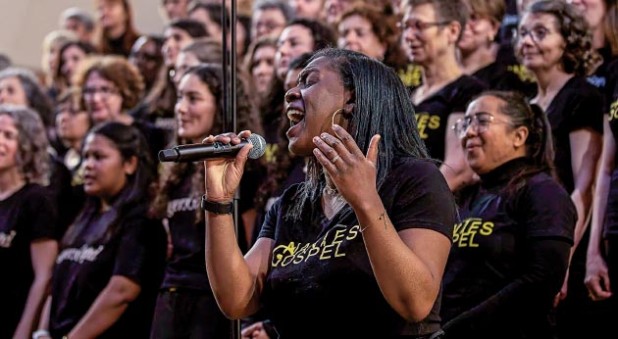
Several church plants have used gospel choirs as evangelistic tools. Through weekly rehearsals, relationship-building, and a shared passion for music, believers can bear witness and share their hope.
France is not so much a closed land as a demanding one, where mission must be patient, creative and deeply human. Our aim is to plant communities capable of integrating into secular France and demonstrating that faith can be lived positively and constructively. We want to restore the church’s meaning and contribute to the social, cultural and spiritual vitality of a nation currently under strain.
To give church plants the best chance of bearing fruit, Perspectives offers various support tools for planters and their teams. For two years, they train alongside an experienced planter, reflecting in detail on mission, vision, values and their target community. They also conduct an ethnographic study of the neighbourhood where the church will be planted, giving them the cultural insight to design a relevant project.
Planting a church is a complex and spiritually demanding process requiring time, perseverance, emotional and spiritual support, deep commitment to God and the community being reached. We believe Jesus is the one building his church. Yet we also acknowledge our responsibility in participating in that work.
Building a culture of evangelism and church planting means creating an organisation where making disciples is natural, planting churches is a normal expression of missionary maturity, each church adapts its practices to its context, leaders and volunteers are equipped, planters are supported, and the vision is passed from one generation to the next.
A missional culture does not appear by accident: it is intentionally built, regularly nourished, and lived together. That is what we are striving to do.