Henry VIII wasn’t the easiest man to work under (or be married to). Yet throughout the decades of his reign, and the reign of his son Edward VI, Archbishop Thomas Cranmer worked tirelessly and with political savvy to progressively reform the Church in England.
As a result, the Church of England, in time, became a light to the world: a great missionary sending church, spreading the gospel and planting churches in every continent – including in NSW.
This global network became the Anglican Communion, a fellowship of autonomous provinces bound together by a commitment to Scripture, and the reformed doctrine expressed in the Thirty-Nine Articles, the Book of Common Prayer and the Ordinal. Sydney Anglicans are direct inheritors of these riches.
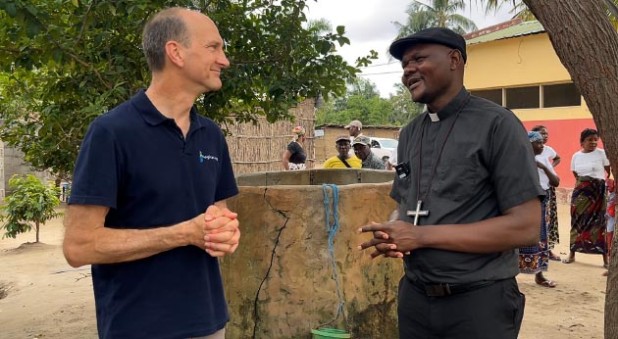
Since becoming CEO of The Archbishop of Sydney’s Anglican Aid, I have had the privilege of visiting 50 Anglican dioceses in 25 countries and am constantly amazed by the ongoing impact of this hard-fought Reformation, which began 500 years ago. Wherever I go, I am welcomed as an Anglican brother, the Bible and prayer remain at the centre of church life, people sing with faith and joy in Christ, and churches are well organised under the leadership of Bible-believing bishops.
Jesus commanded his church to “make disciples of all nations” – and so far, Anglicans have planted churches across 165 nations, with estimates of around 100 million adherents. In many countries across Africa, there is an Anglican Church in every town and village – as is the case across Australia. God has worked powerfully since Cranmer’s efforts at reform!
Right now, an opportunity for a new mission-shaped reformation lies before us if we can rise to the challenge. While it is true that many Anglican church leaders in the West have turned from Scripture to follow the spirit of this age, the majority of the world’s Anglican leaders trust the gospel the missionaries first brought as the only true gospel, and want to continue in it. They know that this gospel, upon which our church was founded, is the only gospel that saves.
From these leaders the Gafcon movement has arisen, and they said:
“Gafcon is a global movement, gathering authentic Anglicans, guarding God’s gospel, growing orthodox leaders, and generating missional resources, for the glory of God!”
The Abuja conference
Last October, the Gafcon leadership declared that “the future has arrived”. Traditionally, the Archbishop of Canterbury has been the symbolic leader of the Anglican Communion, but with Canterbury now turning aside from historic Anglican faith, Gafcon called all faithful bishops to meet in Abuja, Nigeria from March 6-9 to cement a new future, and form a new international team to lead a renewed Global Anglican Communion.
This conference is a pivotal moment for the Anglican Church worldwide, because:
· It restores the Bible as the heart of the Anglican Communion (not historical structures)
· It structurally cuts off those bishops who promote a departure from our biblical legacy and refuse to repent (including the Archbishop of Canterbury)
· It embodies the shift in missional energy from England to the Global South
· It moves the leadership from an historic office in England to a senior bishop/primate who will be elected, not dependent on colonial structures, but on doctrinal orthodoxy and vision for mission
· It links together like-minded Anglicans in partnership from every continent, uniting us as the largest Protestant denomination, and spurring us on to “proclaim Christ faithfully to the nations”
As Anglicans, God has given us an opportunity to advance his cause together, like no other denomination can. This is exciting, but there is a cost to fund this mission.
Our Anglican brothers and sisters in the world’s poorest nations have scarce resources and face challenges in obeying Jesus’ Great Commission and great commandment. The people they serve may lack food, clean water or basic education. In these contexts, it is difficult for churches to feed the hungry, let alone train their gospel ministers.
Many are serving in the context of persecution or war. I was told just this morning that four of the Bible colleges Anglican Aid supports in DR Congo are operating in territory now held by M23 rebels. These students leave families behind in insecure areas so they can be equipped to make disciples. But this is because they know just how much the world needs the gospel of Jesus. They share our convictions but need help.
Many of these poorer dioceses rely on funding from liberal sources in the UK or US to maintain their ministries – which is why many bishops from those dioceses will be absent from the Gafcon Abuja conference.
So, the challenge for the newly reformed Global Anglican Communion is to work together in mission and to raise up alternative sources of funding to support this mission.
That’s where Anglican Aid is already helping, and where we would love to do more. We are already the largest evangelical Anglican aid agency in the Communion. And what makes us unique is that, as well as supporting aid and development projects, we support theological education in Bible-believing dioceses for the long-term health of the church.
The Global Anglican Communion Support Fund
But the task of strengthening the church in every nation is so great and wonderful, that we need to raise a whole lot more money to fund it! So, at the Abuja conference, Anglican Aid is launching a Global Anglican Communion Support Fund. This has been set up to receive donations from anywhere in the world, and will be used to support pastor training and the funding of aid and development projects in the neediest dioceses of our communion.
As well as working with Gafcon-aligned dioceses to help them improve food security, access to clean water, education and more, we are supporting theological training to help them keep the Bible at the centre. In the past five years we have supported the training of more than 2000 pastors. This year alone, we will support the training of more than 750 pastors at 38 Bible colleges in 15 countries.
We want to do this more, to see our reformed Global Anglican Communion speed God’s mission to see his kingdom come on earth, as it is in heaven.
Let’s work together to see that the poorest dioceses among us have the resources they need to keep the Bible at the centre, to care for those around them, and to proclaim Christ faithfully to the nations, till he comes in glory.