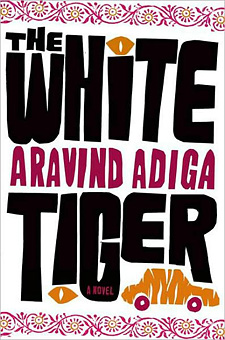
 Man-Booker prize winner The White Tiger has become a publishing phenomenon around the world, and made a celebrity of its author, Aravind Adiga; he was even asked to provide commentary on Barack Obama's election and its impact on world politics.
It has been received heartily in India and the West, and yet it is devastatingly critical of both its own country, as well as the corrupting influence of western consumerism.
At first, I found it difficult to get into the book. There is a fascinating literary device to convey the narrative: a letter from our hero, Munna, to the Chinese Premier about the problems that he sees in modern India, based on his own life story.
However, the narrative is so compelling, the insights so revealing, the dialogue so real… I did get caught up in the world of modern Bangalore, wondering how this boy from the slums could have established himself as an entrepreneur in the Silicon Valley of the East. The answer is only revealed at the end of the book.
So Munna (aka Balram) took me on a great ride that challenged some of my stereotypes of India and the West; and which especially pointed out the growing disparity between the wealthy and the poor.
"These days there are two castes : Men with Big Bellies, and Men with Small Bellies."
Munna goes on to explain what he sees as the fundamental problem:
"A handful of men in this country have trained the remaining 99.9% - as strong, as talented, as intelligent in every way - to exist in perpetual servitude; a servitude so strong that you can put the key of emancipation in a man's hands and he will throw it back at you with a curse."
This is an observation that might be considered patronising by anyone other than a fictional chai boy. Yet in lots of ways it is also empowering, looking beyond the superficial and pleading for opportunities for all.
What is the path Munna takes? What will he need to sacrifice to realise his dream?
Too much. He is willing to sacrifice his name, his family, his caste, his religion, his ethics. How much is the western dream worth?
However, the book introduces some more challenging thoughts. How much do we take for granted? Education, secure housing, employment and good conditions, hygiene, access, choice, egalitarianism… How necessary are all the things we want over and above the things we need?
One of the interesting contrasts is between the Darkness, where 99.9% of the population live, and the Light. The light place where Munna ends up is not as illuminating as he would have us believe. In fact he is in an even darker place than when he began.
Beneath the fast talk, the justification, the caustic observations, is a question of integrity. There are certainly only lies, deceit and corruption within and around Munna. I found myself panting for truth, for a sense of what is real, by the end.
Aravind spent some time being schooled in Australia, I wonder what he observed here? He was also The Times correspondent in India, so has reported extensively about the "new India", the home of the tech-savvy help desks and call centres.
This savage and funny book deserves its acclaim, but it may also lead people to respond to the hard questions and issues raised by its unreliable narrator. A report from the London School of Economics has praised the novel for making development issues more accessible to the public, and for its "...passionate depiction of the perils and pitfalls of rampant capitalism in modern India."
There are some even deeper questions at stake, as well. Questions of the heart.