When St Alban’s, Leura, welcomed a visitor from Uganda to speak at its AGM last year, it was the latest step in a partnership that will celebrate its 30th anniversary in 2026.
The managing director of the Ibulanku Project, Sula Lule, told St Alban’s parishioners how the money they provided was changing lives on the ground in Uganda – and then he got everyone up to teach them a dance.
“There’s no evidence of this because we were all dancing!” laughs the rector of Leura, the Rev James Delanty.
You might wonder why a managing director from Uganda would come all the way to a church in the Blue Mountains, but the answer is simple: because the people at St Alban’s began the Ibulanku Project 30 years ago and have been supporting it ever since.
The project came about because the third Ugandan High Commissioner in Australia, James Lukabyo, was born and raised in Ibulanku, and was also a member of the church in Leura.
His home village is in a poorer area of Uganda, about 150 kilometres northeast of the capital Kampala. Local women used to walk kilometres just to fetch muddy water for their families. So, when Mr Lukabyo made a visit in 1996 with his wife Sheila, villagers asked if the couple could help pay for a bore to be sunk to provide them with clean water.
When the Lukabyos returned to Leura the church held a garage sale, and this raised the money needed for the bore. Two years later, the parish swung back into action to raise funds to establish a small health centre in Ibulanku.
“They had these big plans for a centre, and we said, ‘Well, let’s just begin with a small clinic’,” Sheila Lukabyo recalls. “So, a one-house clinic was what we started with... but then it gradually grew beyond their original plans! Now it’s got outpatients, an operating theatre, a maternity ward, a men’s ward, women’s ward and a children’s ward, and there’s a resident doctor there.
“It’s really grown and it’s very well equipped. They now have a mobile ultrasound and that makes a huge difference. They used to have to send any difficulties in pregnancy to another hospital because they didn’t really know what the problem was. Now, they’re so well equipped that other hospitals are sending their problem patients to us! Which is tremendous.
“The whole project has become so well known in Uganda. The president and various high people in parliament have visited the centre, and the local bishop visited and was so impressed – he lived not far away but had no idea about how splendid it was – that he said, ‘Oh, the Archbishop must see this’, so he came and visited and opened one of the buildings.”
St Alban’s in Ibulanku
In 2007, Sheila Lukabyo encouraged the purchase of a local primary school – St Paul’s, which was renamed St Alban’s – and since then, Leura parishioners and others who’ve heard about the project have sponsored children through the school. Some also support the best students to attend a government high school as boarders.
For those used to Australia’s exorbitant education costs, it’s extraordinary to hear that the primary school fees are currently $130 a year. This includes scholastic materials, a uniform and daily lunch for the students. This might seem like a small amount of money to us, but many families can’t even afford these fees so the sponsorship is a godsend.
When the Ibulanku Project took over the school, it had about 50 students enrolled. Now there are 500, and the gifts and funds raised have helped to pay for new buildings, electricity and other needs – with sufficient space and teachers to keep class sizes manageable.
“It makes us realise what an amazing God we have that can do these things remotely from here to there,” Mrs Lukabyo says. “It’s just wonderful.”
Adds Mr Delanty: “It’s incredible to see what reliable, godly, trustworthy people who are in Uganda and have a direct link with us can do. The money from here goes a lot further over there – even more so because there’s no ‘middle man’.
“And vice versa, the thankfulness they have and the stories that they tell of students graduating and going on to do nursing or education or whatever it is, they are real people that we could go and visit and who are probably related to some of the people in our church. It’s pretty unique to be that close to something.”
A former Leura parishioner, John Sowden, used to make regular visits to Ibulanku with his wife Elizabeth – he taught English as a second language at the school, while she ran sewing classes at the health centre with treadle machines sourced by a retired mechanic for Singer.
The Blue Mountains Grammar School in Wentworth Falls, where Mr Sowden used to serve on the board, also became involved, and still raises funds for the primary school through its students’ annual 45-kilometre charity walk.
Says Mrs Lukabyo: “Blue Mountains Grammar School has largely funded a new assembly hall for the primary school, and it was finished just in time for the students to take their primary leaving exam last year. They were very excited about that, because until now they’ve had to go to other schools for the exam because there wasn’t the room at Ibulanku.”
Growth and self-sufficiency
But the changes haven’t stopped there. Ibulanku remains a village – Mrs Lukabyo says there is still only one road through it and “homes are scattered into the bush everywhere around about” – but in the centre, people now have houses built of brick instead of mud and wattle, and some also have electricity, thanks to the example provided by the school of the benefits of solar power.
The growing number of students, teachers and medical staff have also changed the local economy. There are more stalls in the village trading centre, as there are more people with money to buy food or other goods.
The medical centre is now of a standard that qualifies for some government funding, and the previous decade has also seen a training college for nurses begin and thrive – which Ibulanku locals chose to name the Leura School of Nursing and Midwifery.
“It’s so beautiful that this name fits both places,” Mr Delanty says. “We didn’t ask them to name the nursing school that way – they just chose to do it because they were so thankful for what the Christians here were doing.
“It’s so clear that it’s in the name of Jesus that this is happening. Christians on the ground there know that Christians are praying for them and caring on the other side of the world.”
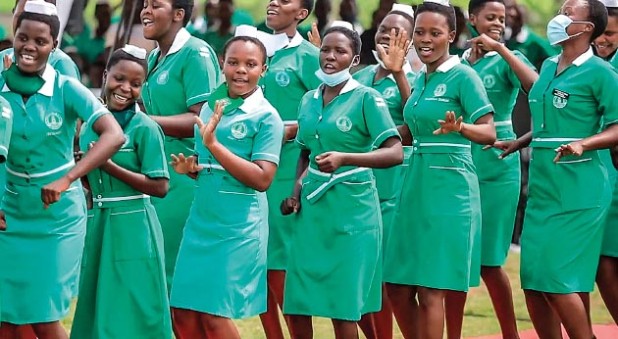
Originally connected to a nursing school in a nearby region, the Leura School of Nursing became independent in 2017 and now has approximately 600 students, whose training is highly regarded and who dance with joy when they graduate.
What is more, the nursing school’s fees help the health centre to be self-sustaining.
“When we started the health centre, we were told that no health centre owned by people overseas could exist on its own without continued help from overseas, but that’s been accomplished because of the nursing school,” Mrs Lukabyo says.
“The fees for the nursing school – which are standard for any nursing school – are more than we need at Ibulanku. Once you’ve paid the staff and the requirements for Uganda’s nursing organisation, there’s money left over to pay the wages of the staff at the health centre. That has made a huge difference.”
Ongoing needs
Of course, there are still necessities and costs that will continue, such as sporadic capital works, sponsorship of students at the primary school, and the larger sponsorship commitment of about $1100 each year for six years at high school, which allows the best of the students to study and board.
There is also a need for younger hands to help steer the Ibulanku Project in Australia. One of Mrs Lukabyo’s sons, Paul, recently joined the small committee that she chairs, but all the other members – including Mr Sowden, who is secretary – are now in their 80s. They are keen to ensure that, should they become unable to fulfil their roles, the work of changing lives in Uganda will continue.
From Leura outwards, the generosity of individuals and groups has created a healthier, more prosperous Ibulanku – because of their love of Jesus, and the knowledge that their support will help him be known and honoured on the other side of the world. Now, hundreds of schoolchildren each year can learn and grow in knowledge as well as faith while, at the health centre and nursing school, staff meet daily to pray and commit their work to the Lord.
It’s a joy for Mrs Lukabyo to see all that has been done, and even though some of it may seem small, simple things such as an election stall at St Alban’s make all the difference in Uganda.
Says Mr Delanty: “We’re a voting booth, and we always have a cake stall and a barbecue, and each year [the primary school] undertakes an amazing project with the funds we raise.
“From a barbecue and a cake stall at a tiny church in Leura they built a playground one year, added a solar battery another year, and painted their whole school in another! It’s just incredible.
“We tell these stories in church and bring out the photos of people at the cake stall, and there’s a real excitement about it every year. And when members don’t know about it and then learn about the work, they go, ‘We’re a part of that? Wow!’”
Those interested in sponsoring students through the Ibulanku Project, or in joining the Ibulanku committee, should contact Sheila Lukabyo here.