Before 1875, those living in Middle Harbour (now Seaforth) who wanted to go to church had to be punted across The Spit by boat and then make the long journey into town to worship.
“It puts us to shame, doesn’t it?” says the rector of Seaforth, the Rev Rich Wenden, who, along with his parish and the local community, celebrated the 150th anniversary of St Paul’s last month.
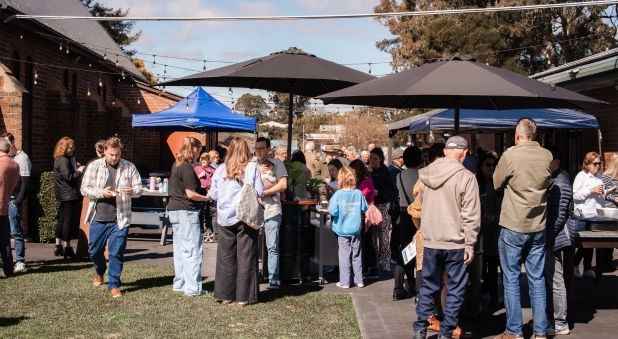
Their joyous anniversary weekend included reunions and memories at a Friday gala dinner; a Saturday of connecting and celebrating with the community; and a Sunday morning affirming the centrality of the Bible, alongside the vision of Building Lives For Christ in the life of the parish, when five members were also confirmed.
As with many old churches, the beginnings of St Paul’s is a fascinating tale.
Land was bought from the local ferryman, and the sandstone building was constructed by one of his sons. Locals enthusiastically cleared away bushland on the site, and timber for the church interior was hauled in from Frenchs Forest.
“The locals were really keen... they wanted to have their own place where they could gather and worship,” Mr Wenden says. “They really got behind ministry, and the growth into the new century, into the early 1900s, was quite significant.”
By the 1930s, the parish covered a huge area and had four church centres: Seaforth, Manly Vale, Balgowlah and Belrose.
“One of the things they tried to do was something they called ‘mobile church’,” Mr Wenden explains. “The minister at the time, he tried to get around to these other centres as much as he could. There was quite a missionary aspect to what they were doing.
“In terms of more modern history... What struck me the most from the conversations I had with past parishioners, including those who had gone into ministry from Seaforth or had served in some capacity on staff here over the years, was that this has been and continues to be a place where the gospel of the Lord Jesus has been proclaimed, where people have been introduced to Jesus and have been nurtured and grown in their faith.
“Seaforth Anglican has been an important part in the lives of so many.”
Thousands moving in
In western Sydney, New Light Anglican in Riverstone has been giving thanks for the 140 years of its church and Christian community amid a rapidly changing area.
Once a standalone town, Riverstone has gradually been swallowed up by the Sydney sprawl – the last churchgoing dairy farmer sold his property within the past 10 years, and it was snapped up for housing.
The church has a bell given by colonial landowner John Schofield, which, on his farm, used to call convicts in from the paddock. However, rector the Rev Daniel Walmsley jokes that they don’t ring the old bell very often as “the neighbours don’t particularly enjoy it!”.
Mr Walmsley came to Riverstone in 2017 when it was a struggling congregation that had come under the wing of Quakers Hill. Celebrating the 140th grew in the minds of members, as “It’s just such a huge thing for the church that it’s going so well at the moment... it became bigger than we expected it to, which was a delightful surprise. It just picked up momentum on us”.
Riverstone is the only location among the Diocese’s original greenfields sites where there is an existing church, but space and other restrictions mean a new building is desperately needed.
A site was purchased years ago, before the property boom, but the parish now needs to build a church, so fundraising for the building was launched at the 140th celebration.
Regarding the boom, Mr Walmsley says: “Our State member told me that the easiest way to think of it is 1000 people a month moving into the electorate. Some suburbs in Sydney have 15,000 people – we have almost that many arriving in just one year, so the facilities are just not adequate to meet the opportunities.”
Bishop Peter Jensen spoke at the packed celebration service, which was followed by a multicultural lunch, with history displays and a jumping castle for the kids.
Says Mr Walmsley: “I just have a lot of thankfulness for all the years of ministry that have happened to enable us to do what we do... We’re not the first ones who have put that effort in, but we have got great opportunities because other people have put in that effort in the past.”
Planting potential
The parish of Waitara has held festivities throughout its 75th anniversary year, keeping up the tradition of celebrating each quarter century of the church’s life.
In addition to an old-fashioned parish picnic, an afternoon singing songs from each decade of their history and a parish dinner and anniversary service, church members are using the anniversary to look forward.
“It’s a great occasion for giving thanks for what has happened here and looking ahead at what is to come,” says rector the Rev Martin Kemp. “We’re looking towards a church planting future, so this is an opportunity to raise money for that 75th anniversary project. It’s a different strategy for our church.
“People are giving thanks that this has been a place where the gospel has been faithfully proclaimed decade after decade. They’re giving thanks for deep times of fellowship with one another. They’re giving thanks that, over the years, we’ve been able to adjust and change as the environment has changed around us.
“There’s a myth that the upper North Shore is a Bible belt. That is no longer true. The number of people professing Christian faith up here is significantly lower than the national average.
“So, we need a fresh approach, and we think church planting is the avenue by which we can bring that fresh approach to bear on our ministry. There’s plenty of work to do and plenty of potential – we need more churches, not fewer!”