
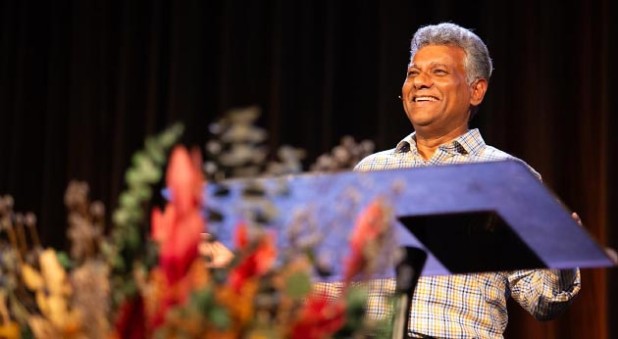
As I write, I have just returned from this year’s CMS Summer School in Katoomba. It is an annual feast of Bible teaching and focuses on the missionary imperative of the gospel.
The CMS cross-cultural workers are so impressive for their sheer self-forgetfulness. They are humble, curious, servant-hearted and, most of all, burdened with the heart of our Master for those who are “without hope and without God in the world” (Ephesians 2:12).
The Church Missionary Society – whose Australian operations commenced in Sydney 200 years ago in 1825 – is one of the vehicles through which the Sydney Anglican Church has fostered long-standing, deep and rich partnerships with Anglicans around the world.
The Anglican Communion is a fellowship of autonomous provinces distributed globally, especially in places where British colonialists expanded the British Empire in the 18th and 19th centuries.
Although the empire has disappeared, the church of Jesus established by Anglican missionaries thrives today in many post-colonial countries. The Anglican Province of the Church of Nigeria claims to have 22 million members nationally, and recently “launched” 15 new dioceses!
The Anglican Communion, unlike the Roman Catholic Church, is not a global hierarchical administrative structure emanating from the pastoral, doctrinal and legal authority of one man – the Pope – but rather, a voluntary fellowship based on mutual recognition of shared life in Christ and a common heritage of biblical convictions, liturgical forms, a missional and pastoral church life, as well as synodical government and episcopal leadership.
Sydney’s fellowship with Anglicans around the world has long been expressed in partnerships with many of our Anglican organisations, including CMS, Moore College, Youthworks, the Archbishop of Sydney’s Anglican Aid and since 2008, Gafcon. These partnerships are based on a shared commitment to the authority of the Scriptures, and the reformed understanding of the faith as expressed in the Book of Common Prayer and the Thirty Nine Articles.
CMS partners with more than a dozen Anglican dioceses around the world including in South-East Asia, Latin America, Europe and Africa.
Through the Centre for Global Mission, Moore College is assisting dioceses in training lay workers and clergy in the Anglican churches of Chile, Peru and Bolivia. In the Province of the Indian Ocean, the PTC (Preliminary Theological Certificate) is being taught in French and Malagasy in Madagascar, and in French and English in Seychelles and Mauritius. PTC in Portuguese is being used for Anglican clergy training in Mozambique, and in English for lay training in Trinidad and Tobago.
Youthworks training materials have been provided at no charge and in nine languages to Anglican dioceses in 27 countries around the world. Twenty seven!
Anglican Aid partners with Anglican Church dioceses around the world, including through primary and secondary education in Uganda, Tanzania, South Africa, South Sudan, Kenya, Egypt, Pakistan and Lebanon. Ministry training is supported through bursaries for more than 750 Anglican clergy and lay students at 38 colleges in 15 nations across Africa and Asia.
Sydney connection to England
Sydney’s connection with the Church of England dates back to the successful efforts of William Wilberforce and the Rev John Newton to secure the placement of evangelical clergyman the Rev Richard Johnson as chaplain to the colony, arriving on the First Fleet in 1788.
The Constitution of the Anglican Church of Australia formally preserves this connection ( or “communion”) with the Church of England so long as it is ‘consistent with the Fundamental Declarations contained in this Constitution’ (Clause 6, Constitution of the Anglican Church of Australia).
In 2008, a number of the leading bishops or Primates of the Anglican Communion declined to attend the Lambeth Conference, a once-in-10-year gathering of Anglican bishops called together by the Archbishop of Canterbury. Their unwillingness to do so was the culmination of more than a decade of division across the Anglican Communion over the authority of Scripture and the nature of genuine discipleship, especially as it relates to human sexuality.
Out of the meeting in Jerusalem in 2008 of 1148 clergy and laity, including 291 bishops from seven Anglican provinces, came what is now known as Gafcon Global Anglicans, with then-Archbishop of Sydney, Dr Peter Jensen, as its first General Secretary.
In 2023, following the decision of the Church of England to permit the blessing of people in civilly contracted same-sex marriages, Gafcon and the Global South Fellowship of Anglicans formally rejected the Archbishop of Canterbury as “first among equals” in the global Anglican Communion.
The chairman of Gafcon, Archbishop Laurent Mbanda, Primate of the Anglican Church of Rwanda, has called on orthodox Anglican bishops to gather in Abuja, Nigeria in March to preserve and promote the fellowship of Anglicans worldwide on the basis of the authority of Scripture, and – as far as possible – to separate from the Anglican structures that centre on the Archbishop of Canterbury.
The Sydney Anglican Diocese is an integral part of the Anglican Church of Australia and will not dissociate from it. We value tremendously our fellowship with faithful Anglicans around Australia, as well as around the world, including in England.
At the same time, Sydney has consistently called on Anglicans who have abandoned the authority of Scripture in doctrinal or ethical matters to repent and return to a glad obedience to the Lord and his Word. For that reason, I and the assistant bishops will attend the meeting of bishops to take place in Abuja.
Sydney’s bishops have not attended the Lambeth Conference since 1998, nor has Sydney made voluntary financial contributions to the Lambeth Anglican Communion Office since 1994, nor have we participated in Anglican Communion Commissions (with the notable exception of the outstanding leadership of Garth Blake SC as chairman of the Anglican Communion Safe Ministry Commission).
All the while, however, we have pursued deep partnership with faithful Anglicans around the world and across Australia, through our organisations and the Work Outside the Diocese committee of the Synod – which contributes 5 per cent of the annual Synod budget to supporting gospel work globally and nationally.
With God’s help, we will continue to foster gospel partnership in this way, on the basis of our fellowship in Christ; while declining to be “unequally yoked” with those who claim the name of Anglican but deny the authority of the Lord through his Word.


