Dan Brown’s conspiracy thriller, The Da Vinci Code has spent most of 2004 as the top-selling novel both internationally and in Australia.
With its astonishing claims about Christianity and Jesus the novel has, for some, justified their rejection of Christ and led others to doubt the foundations of their faith. It has also generated an array of published responses.
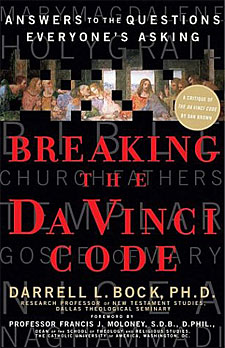 Although The Da Vinci Code sits squarely in the airport novel genre it maintains that its views on Christ and his church are factual. One of the first to take issue with Brown’s assertions is Dr Darrell L. Bock.
Dr Bock is suitably qualified to refute the novel’s arguments. Research Professor of New Testament Studies at Dallas Theological Seminary, Bock has also written a number of books including Studying the Historical Jesus and Jesus According to Scripture.
While Brown’s book makes extraordinary statements about Christianity, Bock’s work focuses on several key assertions.
- That Jesus and Mary Magdalene were married.
- That being single would have made Jesus ‘un-Jewish’.
- That the formation of the Scriptures into the New Testament was a political act.
- That Christ’s divinity was ‘decided’ by vote at Nicea.
- That the true gospels (the secret Gnostic ones) were suppressed.
Working through the evidence, Bock demonstrates the flimsiness of Brown’s reasoning and the multitude of errors spread throughout the novel. The Gnostic Christianity that The Da Vinci Code depicts and admires has little resemblance to the elitist movement that existed at the time of the early Church. Only the spiritual and intellectual believers who received special revelation were counted as believers. The “Secret” gospels that supposedly reveal the truth about Christ were not secret in the sense that they were hidden. “Secret is a term that highlights the internal emphasis of these ancient texts.”
Dispassionate and logical, Breaking the Da Vinci Code takes its task very seriously. Dan Brown’s novel can readily be dismissed as a frivolous and shallow piece of fiction, however Bock is convinced it is “a conscious effort to obscure the uniqueness and vitality of the Christian faith and message”.
This concise book (188 pages) doesn’t tackle every error in the novel but it refutes the essence of Brown’s theses. An effective apologia, Breaking the Da Vinci Code is worth reading simply as a reminder of Christianity’s historical basis but is essential for people who wish to engage with those beguiled or confused by Dan Brown’s specious allegations.
Visit www.thomasnelson.com for a sermon outline on Breaking the Da Vinci Code and a set of discussion questions.