Findings from a study by National Church Life Survey indicate many children aged 10-14 in Protestant congregations actually like turning up for services each week " contrary to the myth that "kids are bored in church'.
Empirical research from the NCLS shows that an inclusive and Scripture-based approach is exactly what the age group like the most.
"Many children do appreciate the nurturing of their faith and respond to a suitable learning environment,' said NCLS Director Keith Castle.
"The more that children feel that they are learning about God at church services, the more they will like attending."
 Of the children who said they liked going to church in one study Mr Castle’s team is working on, 84 per cent said they "often learn about God there'.
Conversely, of the kids who sometimes or never liked church services, just 29 per cent felt they were often learning about God there.
Holy Trinity putting theory into practice
"Top Story,' a program being run at Holy Trinity, Adelaide is one such real-world experience of active youth going beyond games and getting serious with their faith.
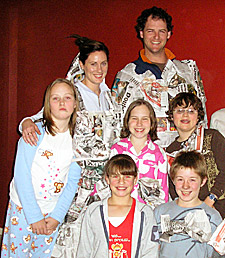
Initiated this year by associate minister, 28-year-old Clayton Fopp, the program is specifically aimed at children from school years Five to Seven (10-13 year-olds), meeting each Friday during school terms in a local hall.
"We'll start the night with games to wear the kids out," Clayton jokes.
"But everything is closely tied to where we're trying to go that night."
One theme this year centred on "Big Bible Stories,' he explains.
That meant looking closely at Moses, Abraham and Daniel, but not via old-fashioned blackboard rote learning, Clayton points out.
The characters are placed into a biblical theological framework with discussion, craft, games and storytelling.
"At the end of the term, although they're only 10-13 year-olds, they actually have a picture of biblical theology. Now the kids probably wouldn't call it that. But when they then get into church, and they hear about God's unfolding revelation of himself throughout the Bible, they've actually already got a picture in their minds. So they can, for example, draw timelines of significant events in the Old Testament."
This is an edited version of a story that was first published by NCLS on [url=http://www.ncls.org.au]http://www.ncls.org.au[/url]. Story by Paul Gallagher.