Before the last election, Christians and other people of faith were assured that “an individual of their own consent seeking guidance through prayer will not be banned”.
Now, this promise in relation to the Conversion Practices Ban Act, appears to have been breached by guidelines surrounding the act from Anti Discrimination NSW (ADNSW).
On it’s website, ADNSW states "It is not unlawful for a person of their own consent, to seek counsel or guidance from within their faith. Counsel and guidance, including prayer, can still be given as long as it is not directed to change or suppress the person’s sexuality or gender identity. Conduct which is directed to those ends is a conversion practice, and will be unlawful even when a person seeks them out for themselves. They are also unlawful if a parent seeks them out – or provides consent – on behalf of their child."
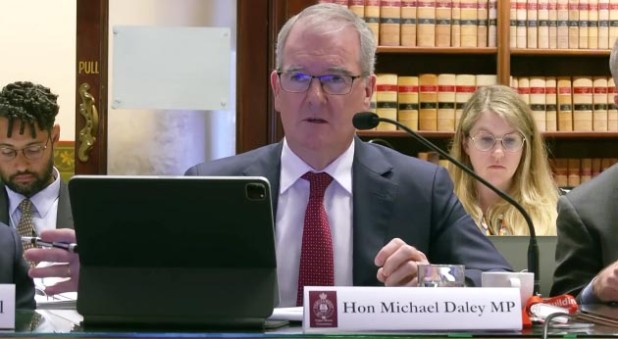
State Attorney General Michael Daley came under questioning in a state Budget Estimates hearing and spoke about 'unlawful prayers'.
Mr Daley said he supported freedom of religion and the right of people of faith to pray, but under questioning from Liberal MLC Susan Carter, Mr Daley had this exchange (video below).
Carter: Anti-Discrimination NSW on their website advised that the act does not prohibit prayer, but, quote, "Praying with or over a particular person in an attempt to try to change or suppress that person's sexuality or gender is unlawful." End quote. That statement sounds like a prohibition on prayer, does it not? Prayer is lawful unless it is about a matter which has been declared to be unlawful.
Daley: No. Conduct is lawful unless it's - unless it offends the statute. So when it comes to conversion practices, there are very clear words in the statute that describe what a conversion practice is and describe what a conversion practice is not. It is either one or the other. And you can pray with a person and do all those sorts of things. But if you pray in a way that it becomes …. you know, a sustained practice directed to a person with a view to changing their sexual orientation or gender, that's against the law. If you're sitting down praying with someone to strengthen them and guide them and all those pastoral considerations, that's fine. But if you're sitting down to pray the gay away, that's not.
Carter: So with respect, isn't prayer commonly about change of all sorts of things?
Daley: It depends on the context, on the words that constitute the prayer, on the circumstances that underpin the conduct. And so I can't give you a definitive answer on what that might constitute.
Carter: So just to summarise, you're saying it is entirely appropriate for the NSW Government to put limits on what lawful prayer can be?
Daley: Well, if it's an unlawful prayer, then it's not a lawful prayer.
Mrs Carter told the hearing that many people had raised the issue with her and had expressed alarm at the ADNSW website which appeared to be the government seeking to limit the freedom to pray.
The NSW Faith Affairs Council has written to the Attorney General expressing similar concerns and seeking clarification in light of the Premier's election promise.
When contacted by Anglican Media, Mr Daley’s office issued a statement saying “The Act is consistent with the Premier’s statements. The exclusions in the Act mean that private prayer, including personal prayer and reflection, will not be a conversion practice. Expression of a belief or principle about specific matters such as through a sermon or one-on-one conversations—for instance, explaining that a religious text states homosexuality is a sin will also not be a conversion practice.”
The statement does not directly mention the wording of the Premier’s promise about an “individual of their own consent seeking guidance through prayer” but gives other examples.
“The Act also provides a non‑exhaustive list of examples of conduct that will not be a conversion practice.
- Stating relevant religious teachings or what a religion says about a specific topic
- General requirements in relation to religious orders or membership or leadership of a religious community
- General rules in educational institutions
- Parents discussing matters related to sexual orientation, gender identity, sexual activity or religion with their children.
However, religious practices are excluded from the ban on conversion practices only where they are not a practice, treatment or sustained effort directed to changing or suppressing sexual orientation or gender identity.” Mr Daley said.
Anglican Media has asked for further clarification, particularly in light of the wording of the Premier’s promise on consensual prayer.