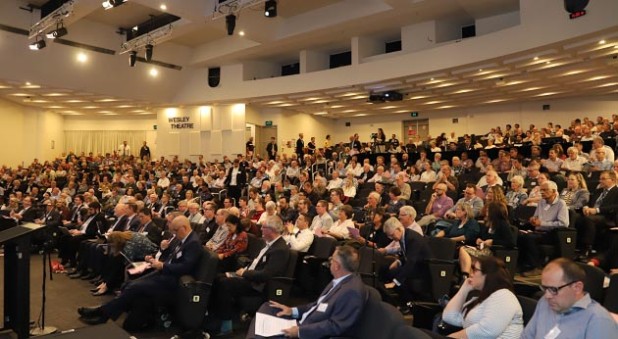
“The Act purports to give churches, schools and parents permission to teach about sexual orientation, gender identity, sexual activity and religion. But, respectfully, we do not need the permission of the Government to teach about such things,” said Archbishop Kanishka Raffel, drawing a line in the sand in his opening address to the Synod of the Diocese of Sydney.
“I want to state clearly and publicly to you all - that I will stand by any clergyperson or church worker who finds themselves brought before a tribunal or court because of this poorly conceived law. We must not be silenced or intimidated from teaching God’s good plan for human sexuality and relationships. We will insist on the freedom to do so, respectfully but without fear. We will obey God”
The act being referred to was the NSW Conversion Practices Ban Act 2024, which Premier Chris Minns promised would not restrict churches in prayer or preaching. That pledge has now been undercut by Anti-Discrimination NSW.
It was claimed the Act would give religious freedom while outlawing so-called gay conversion therapies, which the Sydney Synod had previously declared it opposes. Premier Minns, before the last election, promised that “an individual of their own consent seeking guidance through prayer will not be banned“.
A packed Synod applauded the Archbishop’s pledge to stand by those caught up in what he called “grave intrusions into the lives of families, individuals and religious communities”.
Synod later passed a resolution thanking the Archbishop and calling on the NSW Government to uphold the Premier’s election commitment.
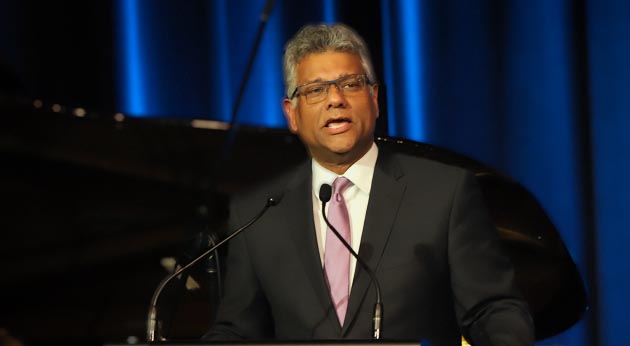
“I think is the first time in my life there is now a genuine possibility that I could be in breach of the law in NSW for doing nothing more than teaching people what the Bible says about human sexuality, encouraging them to live in accordance with this and praying to that end,” Bishop Michael Stead told the Synod about the Act, which came into effect in April.
“A group of faith leaders worked extensively with the Government to arrive at the legislation that went through the Parliament so that it would not capture ordinary religious practices and we thought that we had achieved that through a series of exemptions,” Bishop Stead said. “However, the implementation of the Act, which is in the hands of Anti-Discrimination NSW, does not deliver on these promises.”
At the core of the issue are the terms “conversion practice” or “suppression practice” for a person’s sexuality.
Bishop Stead said faith leaders were led to believe that the Act distinguished between sexual orientation and sexual activity, and that it was not a change or suppression practice to teach someone to abstain from sexual activity contrary to the Bible's teaching – and that prayer for that would not be unlawful under the Act.
“We have been engaging extensively with Anti-Discrimination NSW since the Act came into force as to whether certain religious practices were conversion or suppression practices,” he said. “They said they cannot answer our questions, they cannot give us guidance because there is no case law. Until this happens they intend to give the maximal interpretation to the definitions in the Act for the benefit of those for whom the act was created, the LGBT community.
“This means that they will accept all complaints that fall into the unknown, the grey zone, and wait for these complaints to work their way through systems of tribunals and courts to ultimately determine what is and isn't a suppression practice.”
Dr Stead said that although many of the practices won’t actually turn out to be conversion or suppression practices, the result would be a sustained legal process for people of faith and, in his words, “the process is the punishment”.
… encourages Christians to be unafraid to proclaim the truth of God’s word in matters relating to sexuality, marriage, identity and gender, and to provide prayer for those who seek to live a godly life in obedience to God’s word
The Synod resolved that it “encourages Christians to be unafraid to proclaim the truth of God’s word in matters relating to sexuality, marriage, identity and gender, and to provide prayer for those who seek to live a godly life in obedience to God’s word and aligned with God’s purposes, notwithstanding that they may be subject to a complaint under the CPB Act for doing so”.
It also “commends to parishes and organisations the work of Living Faith, as it seeks to provide biblical teaching, encouragement and support to Christian men and women who experience attraction to the same sex or gender incongruence as they seek to express their sexuality and gender in accordance with the historic Christian faith, and to assist parishes to welcome and love these men and women.”