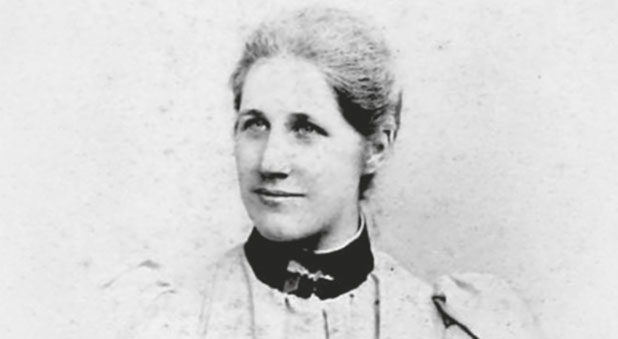
In the Province of the Dragon: The Flower Mountain Quartet, Volume 3 – A Pioneer Deaconess in Southern China from the Boxer Uprising to the Communist Insurgency by Robert and Linda Banks (Pickwick Publications)
Readers of Australian Christian histories may already be familiar with the name Sophie Sackville Newton – Australia’s first home-grown deaconess, who spent more than 30 years as a missionary in China.
Before Robert and Linda Banks shared elements of Sophie Newton’s life and work in the book View from the Faraway Pagoda in 2013, not many people would have known about her. And not only Miss Newton, but other faithful (often female) servants of the King in Australia, who travelled across the world in Jesus’ name, well aware that others who had done so had not returned.
The authors have subsequently published the stories of numerous other missionaries to China such as Amy Oxley, Martha and Eliza Clark, and the children of murdered couple Robert and Louisa Stewart. The passing of time has also provided opportunities for further research, increased access to archives and connections in China that have highlighted Miss Newton’s significance to the work in which all these missionaries were involved, so it’s not surprising that Robert and Linda Banks should feel the value of now telling her story more fully,
Yet, while In the Province of the Dragon focuses on Sophie Newton’s work and faith – amid numerous trials – it also takes note of the other single women who laboured before her, beside her and after her. The book is therefore appropriately dedicated “To single female servants of God who have risked all for the sake of Christ”.
Sophie Sackville Newton was born in England in 1867, moving to NSW with her family at the age of five. She grew up near the regional town of Singleton with strong family examples of faith and was confirmed in the local Anglican church when she was 18.
Wholehearted in her desire to serve the Lord, she ended an engagement a couple of years later because she felt it was not the life to which she was called. But she was not yet certain how God wanted her to serve. A move to Sydney with her family a few years later soon brought about the answer: mission work.
Family tragedy delayed Miss Newton’s move to the mission field but, in 1897, five years after she was made one of the first parish deaconesses in the Sydney Diocese, her heart’s desire was fulfilled when she boarded a ship bound for China and a ministry of care, education and gospel proclamation.
To say some of her experiences over the next decades were hair-raising is an understatement. She lived and ministered through the Boxer rebellion, insurgencies, riots and the unpredictability of local warlords; the scourge of opium addiction (enabled by the British Government) and the terrible practice of footbinding; oppressive migraines, epidemics, taking on the guardianship of two orphaned children, and a workload that exhausted her and her colleagues.
And yes, she knew about much of this in advance, which only increased her determination to go. How many of us would not only be willing to go in such circumstances, but stay and serve with the joy and the full heart of Sophie Newton? I wonder. As with anyone who puts their hand to the plough, we can only do it in the strength the Lord provides, but it’s certainly a challenge – and therefore a question worth asking.
For Miss Newton, to go was joy and to return “home” created longing to go back to her adopted country. This is not to paint her as some plaster saint, but to recognise that she was a faithful woman who was ready to serve, and who trusted that God would use her to further his kingdom despite any personal shortcomings. And he did.
It’s wonderful to now have this deeper dive into her life and ministry, and though there are editorial errors that can trip the reader up from time to time, it is well worth persevering. In the Province of the Dragon provides a wonderful cultural and faith window into China’s past (and Sydney’s), as well as great encouragement to us all to live in the light of eternity as servants of the King.